ALDA Stories
ALDA Stories
Addressing Fat and Firmness Together: A Closer Look at ONDA
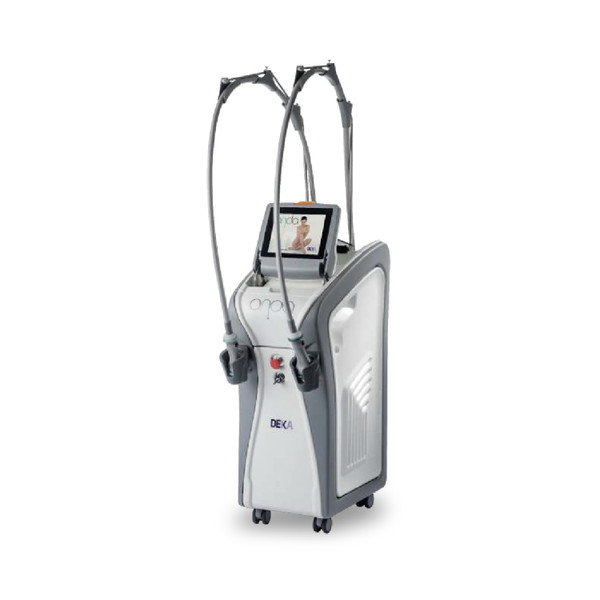
■ Introduction
A jawline that's losing definition, extra fullness and sagging under the chin, stubborn fat in areas that just won't budge no matter how much you exercise. If you've started looking into non-surgical treatments for concerns like these, you've probably come across the term "microwave."
Today, I'd like to talk about ONDA, a device that uses Coolwaves, a 2.45 GHz microwave technology. We'll walk through how it works, what the research shows, and what's worth knowing before you get treated.
■ 1. How Is Microwave Different from Radiofrequency (RF)?
Broadly speaking, microwaves are also a type of electromagnetic wave, sitting in a much higher frequency band than radiofrequency (RF). ONDA uses 2.45 GHz microwaves and is designed for a maximum output of 200 W.
When microwaves reach tissue, molecules vibrate and generate heat. The authors of the published studies explain that at 2.45 GHz, the device is designed so that energy passes relatively "through" the skin layers and concentrates in the subcutaneous fat layer beneath.
That said, this describes the device's design principle. How much heat actually reaches a given depth can vary depending on skin thickness, fat thickness, output, cooling, and handpiece movement.
■ 2. What Happens Beneath the Skin?
The mechanism described in the studies can be summarized as follows:
▸ Thermal stimulation: Fat cells under heat stress release their fat content outward
→ This is the mechanism of action proposed in the studies.
▸ Fat cell damage: As this process intensifies, cell membranes may be damaged
→ Not all fat cells respond to the same degree.
▸ Clearance: Macrophages gather to clear the remaining fat content, which moves into the lymphatic system
→ This is why changes are assessed over several weeks rather than right after treatment.
▸ Collagen response: Dermal collagen contracts and reorganizes when heated
→ This is the basis for expecting firming and tightening effects.
■ 3. The Core of ONDA: Three Handpieces
ONDA has three handpieces that work at different depths.
▸ Pocket (designed heating focus: approx. 3 mm): Firming and tightening targeting the dermal collagen layer; under the chin
▸ Shallow (designed heating focus: approx. 7 mm): Superficial fat layer, skin firmness, fat under the chin, early-stage cellulite
▸ Deep (designed heating focus: approx. 12 mm): Localized fat in larger areas such as the abdomen and thighs; deep cellulite
All three handpieces operate with contact cooling (5°C).
For areas with thin skin and fat layers, such as the face and under the chin, Pocket and Shallow are mainly considered, while Deep is considered for larger fat areas on the body. The order and combination of handpieces depend on whether fat or sagging is the main concern.
💡 Can it be used on the face?
A 2024 international advisory board recommendation advised against using the Deep and Shallow handpieces on the face and neck, with the area under the chin as the only exception. Treatment there is limited to the zone from 1.5 cm below the lower border of the jawbone down to the hyoid bone, in order to avoid the nerves and blood vessels that run along the jawline.
However, this is a conservative guideline based on experience with body treatments. In Korea, the Shallow handpiece is widely used along facial contours, and in such cases the output is lowered and high-risk areas are avoided.
Published studies are also limited to the area under the chin, so facial treatment is less an area with well-established evidence and more one where the provider's experience and judgment matter most. Whether to treat, and how extensively, is decided carefully based on the area, amount of fat, and skin thickness.
■ 4. Designed for Comfort and Safety
• Contact cooling: The handpiece cools the skin surface while delivering energy.
• Skin contact (coupling) check: The contact between the handpiece and skin is indicated by LED color. If contact is insufficient, the device is designed so that output is not properly delivered or stops.
• Skin temperature monitoring: The recommendations advise checking skin surface temperature with a thermal camera or similar device and keeping it from exceeding 40–41°C. This does not mean the temperature throughout the deeper skin is the same.
Even with these features, the risk of side effects such as burns and blisters is not eliminated.
■ 5. What the Research Shows
[ Clinical Studies (Human Subjects) ]
▸ Under the chin, Pocket handpiece (10 women)
• 2 sessions, 30 days apart
• Submental skin laxity grade (4-point scale) decreased from a mean of 3.6 to 2.3 (12 weeks after the last session)
• No adverse events reported during follow-up
• Limitations: A small, uncontrolled study of 10 participants with a short follow-up of 12 weeks. Facial areas other than under the chin were not evaluated.
▸ Under the chin, Shallow handpiece (48 patients)
• 6 sessions, 2 weeks apart
• Improvements in submental fat and skin laxity assessments reported at 6-month follow-up
• Limitations: Not a study of the full face.
▸ Abdomen (19 patients: 9 men, 10 women)
• 3 sessions, 4 weeks apart
• Mean reduction in abdominal circumference of 3.80 ± 1.21 cm, 4 weeks after the last session
• No severe pain or discomfort reported; no significant changes in blood tests (lipid, liver, and kidney values)
• Limitations: A small, single-center, uncontrolled study that mainly used the Deep handpiece. Results were assessed by circumference measurement only, and publication costs were funded by the manufacturer.
[ Long-Term Follow-Up Studies ]
▸ Two long-term follow-up studies
• No long-term adverse events reported over follow-up periods of 9 months and 1 year, respectively
• Limitations: The authors of the recommendations themselves note that data on long-term efficacy and safety are still lacking.
■ 6. Who Might Consider ONDA
✔ Those bothered by both fullness and sagging under the chin
✔ Those concerned about firmness due to mild to moderate skin laxity
✔ Those who find surgery or downtime burdensome
On the other hand, ONDA is not a weight-loss treatment. Also, as fat decreases, previously hidden skin laxity may become more visible, so a thorough examination before treatment is essential.
[ Please Let Us Know Before Treatment If You: ]
• Are pregnant or breastfeeding
• Have an implanted electronic device such as a pacemaker
• Have had cancer treatment within the past 5 years
• Take anticoagulants or antiplatelet medication
• Tend to form keloids or have skin that scars easily
• Have implants, fat grafts, or a history of filler or Botox in the treatment area (filler or Botox in the same area may become less effective, so timing is sometimes adjusted.)
■ 7. Frequently Asked Questions
Q. How long does the treatment take?
A. Treatment time varies with the total energy (J, joules) and output (W, watts), but it usually takes about 10 to 20 minutes. In the submental Pocket study, each session took about 10 minutes, and in the abdominal study, about 7 to 10 minutes per 15 × 15 cm zone.
Q. How many sessions will I need?
A. Studies ranged from 2 sessions (30 days apart) to 6 sessions (2 weeks apart). An interval of at least 15 days is recommended between treatments on the same area.
Q. Does it hurt?
A. Studies reported little discomfort, but you may feel warmth or a stinging sensation. Let us know how it feels during treatment, and we'll adjust the output and speed.
Q. What should I keep in mind after treatment?
• Avoid applying moisturizer to the treatment area from the day before treatment
• Avoid direct sunlight for 2 days after treatment
• Avoid hot water while redness remains
• A follow-up check after 1 month is recommended
Q. Are there any side effects?
A. Itching, reduced sensation, firmness, warmth, tenderness, redness, swelling, bruising, blisters, or burns may occur, and most improve within a few days. Small lumps (nodules) may form under the skin; according to the recommendations, they resolved in about 78 days on average. In rare cases, they may persist longer.
■ Closing Thoughts
ONDA is a device that uses 2.45 GHz microwaves to deliver heat with both the fat layer and dermal collagen in mind. Its three handpieces approach different depths, from the dermis down to the deep fat layer, while contact cooling and skin contact checks help keep safety in check.
There are studies reporting improvement in submental laxity and reduction in abdominal circumference, but many are still small and uncontrolled, so their limitations should be considered as well.
That said, even with the same device, the handpiece and output settings will vary depending on your fat thickness, degree of sagging, and the results you want. Be sure to have a thorough consultation beforehand to build a plan that's right for you.
※ This article is for informational purposes only. Treatment results and side effects may vary from person to person. Pain, redness, swelling, nodules, and other reactions may occur after microwave treatment, and side effects such as burns are also possible, so always consult a physician before undergoing any treatment.
※ The illustrations are newly created conceptual diagrams based on the principles described in the studies. They are not actual thermal images or patient before-and-after photos.
■ References
The following papers do not guarantee the results of any specific treatment.
▸ ONDA · International advisory board recommendations (review)
Hoffmann K, Zappia E, Bonan P, et al. Microwave-Energy-Based Device for the Treatment of Cellulite and Localized Adiposity: Recommendations of the "Onda Coolwaves" International Advisory Board. Bioengineering. 2024;11(12):1249.
https://doi.org/10.3390/bioengineering11121249
▸ ONDA · Prospective clinical study, abdomen (19 patients)
Bonan P, Coli F. Ergebnisse zur Reduzierung von subkutanem Fettgewebe mithilfe eines neuartigen, auf Mikrowellentechnologie basierenden Body-Contouring-Systems. Die Dermatologie. 2023;74:765–771.
https://doi.org/10.1007/s00105-023-05200-y
▸ ONDA Pocket handpiece · Prospective clinical study, under the chin (10 women)
Zappia E, Bonan P, Coli F, et al. An innovative microwave technology for the treatment of submental skin laxity. Lasers in Medical Science. 2025;40:28.
https://doi.org/10.1007/s10103-024-04270-1
▸ ONDA Shallow handpiece · Clinical study, under the chin (48 patients)
Salsi B, Fusco I. Non-invasive system delivering microwaves energy for unwanted fat reduction and submental skin tightening: Clinical evidence. Journal of Cosmetic Dermatology. 2022;21(11):5657–5664.
https://doi.org/10.1111/jocd.15205