ALDA Stories
ALDA Stories
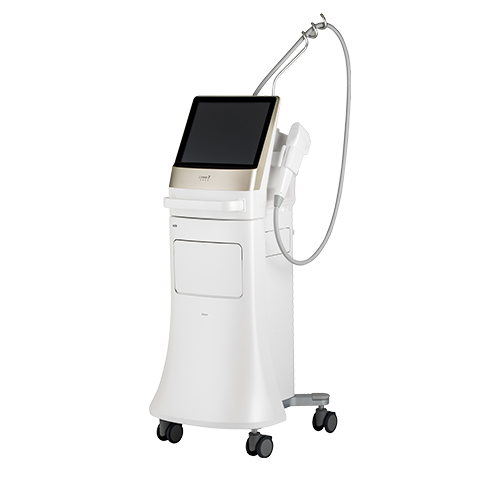
Dividing Depth by Dot and Line: A Closer Look at LinearZ
■ Introduction
A jawline and cheek contour that's gradually losing definition, skin texture that sags as firmness declines, fine lines starting to settle across the face. If you've started looking into non-surgical lifting for concerns like these, you've probably come across terms like "ultrasound lifting" or "HIFU."
Today, I'd like to talk about one focused ultrasound device in particular: LinearZ, which delivers energy in two ways, Dot and Linear. We'll walk through how it works, what the research shows, and what's worth knowing before you get treated.
■ 1. How Does Focused Ultrasound (HIFU) Work?
When you focus sunlight to a single point with a magnifying glass, only that spot heats up. Focused ultrasound works in a similar way: it concentrates ultrasound energy at one point at the desired depth beneath the skin to generate heat.
LinearZ uses ultrasound at three frequencies (2 MHz, 4 MHz, and 7 MHz) and is designed to instantly raise the temperature at the focal point to 60–70°C, creating small thermal coagulation points. [ MFDS approval documents ]
Frequency is related to how deep the energy reaches. The higher the frequency, the more easily energy is delivered to shallow layers; the lower the frequency, the deeper it can go. That's why LinearZ uses a 7 MHz cartridge for the shallow dermis, 4 MHz for deeper layers, and 2 MHz for deep layers of the body.
That said, this describes the device's design principle. How much heat actually reaches a given depth can vary depending on skin thickness, energy, and treatment method.
■ 2. What Happens Beneath the Skin?
The mechanism described in the approval documents and studies can be summarized as follows. [ MFDS approval documents; References 1, 3 ]
▸ Thermal coagulation: Small thermal coagulation points, 1–2 mm in size, form at the focal point
→ The thermal effect gradually decreases toward the surrounding tissue.
▸ Initial contraction: Heated collagen contracts
→ How it feels right after treatment is not the final result.
▸ Healing & remodeling: As the treated area heals, collagen and elastic fibers are newly formed and reorganized
→ The increase in elastic fibers was observed mainly in animal studies.
▸ Follow-up: Changes in wrinkles, firmness, and contour are assessed
→ The LinearZ clinical studies below evaluated results 12 weeks after treatment.
That's why, with ultrasound lifting, it's important to assess results over time rather than judging only by how things look right after treatment.
■ 3. The Core of LinearZ: Dot and Linear
LinearZ lets you choose between two ways of delivering energy.
▸ Dot: Delivered like a series of dots, spaced 1.0–2.0 mm apart
→ A setting that concentrates energy at each point
▸ Linear: Delivered as a continuous line with no gaps between points
→ A setting that spreads the same energy over a wider area
In a porcine skin study, at the same energy, Linear spread heat more widely, while Dot concentrated it more narrowly and reached a higher peak temperature. [ Reference 3 ]
◆ Cartridges, Chosen by Depth
▸ Accu Basic (7 MHz, focal depth 1.5–3.0 mm): Dermis
▸ Accu Essential (7 MHz, focal depth 1.5–4.5 mm): Dermis to near the fascial layer
▸ Accu Core (4 MHz, focal depth 3.0–4.5 mm): Subcutaneous layer to near the fascial layer (SMAS)
▸ Contour (2 MHz, focal depth 9.0–13.0 mm): Body areas such as the thighs
The "Accu" cartridges can change depth in several steps within a single cartridge, making it easy to adjust depth to the skin thickness of each area. [ MFDS approval documents ]
In practice, cartridges, modes, and energy are combined depending on skin thickness, treatment area, and your concerns.
💡 How much of the face can be treated?
Under its approval in Korea, LinearZ's intended uses are "eyebrow lifting" with the facial cartridges and "improving skin firmness of the thighs" with the body cartridge. [ MFDS approval documents ]
Published studies have also reported results on a wider range of areas, including the forehead, cheeks, around the mouth, under the chin, and the neck. [ References 1, 2 ] However, these findings come from small studies, so for areas outside the approved scope, the provider carefully checks skin thickness and high-risk areas before deciding.
The studies also designated certain zones as off-limits, including the facial nerves of the forehead and temples, the nerve along the jawline, and the thyroid cartilage area of the neck. [ References 1, 2 ]
■ 4. Designed for Comfort and Safety
Many people picture ultrasound lifting as "painful, like it's rattling your bones." LinearZ was designed with both pain and safety in mind:
• Skin surface temperature standards: Under the approval standards, the temperature rise outside the focal point is to be kept at 10°C or less, and the skin surface temperature at 43°C or below. This does not mean the entire skin is at 43°C. [ MFDS approval documents ]
• Cartridge temperature display and warnings: The LED on the handpiece changes color with cartridge temperature: green (below 38°C), yellow (38–43°C), and red (43°C and above). A warning appears at 40°C, and at 43°C the device prompts you to switch to another cartridge. [ MFDS approval documents ]
• Level modes tailored to pain: There are settings that suggest low-energy Dot mode as the default for those sensitive to pain, and Linear mode for those who want a shorter treatment time. A warning appears on screen if the spacing is set too narrow (1.2 mm or less) or the recommended energy is exceeded. [ MFDS approval documents ]
Even with these features, the risk of side effects such as burns and blisters is not eliminated.
■ 5. What the Research Shows
Research data on LinearZ has been building in Korea. Below, clinical studies that followed human patients are presented separately from animal studies that examined how the device works.
▸ Human · Retrospective · Fine wrinkles of the face and neck [ Reference 1 ]
30 Asian women (25 analyzed), single treatment, 12 weeks
• Findings: Only the dermis was treated, using 7 MHz at 1.5 and 2.0 mm, Linear 0.2 J. At 12 weeks, mean wrinkle depth decreased from 0.42 mm to 0.34 mm, and the elasticity index (R2) increased from 0.63 to 0.77. Temporary redness (10%) and swelling (6%) resolved within 24 hours.
• Limitations: A single-arm, uncontrolled, retrospective study with a short follow-up of 12 weeks. Researchers affiliated with the manufacturer participated.
▸ Human · Prospective · Facial contour and under the chin [ Reference 2 ]
38 Korean adults (32 completed), single treatment, 12 weeks
• Findings: Dot and Linear were applied separately depending on the area. On 3D imaging, volume decreased by an average of 2.1 cm³ in the lateral cheekbone area and 3.3 cm³ in the central submental area, while the area around the mouth increased by 0.7 cm³. Pain (18%), redness (14%), and temporary reduced sensation in the jaw area (5%) were reported.
• Limitations: There was no control group, and weight changes were not separately controlled. People prone to facial hollowing were excluded from the study, and researchers affiliated with the manufacturer participated.
▸ Animal · Aged mice + aged fibroblasts [ Reference 3 ]
Single treatment, 4 weeks
• Findings: Comparing Dot and Linear at 0.3, 0.5, and 0.7 J, the increase in collagen and elastic fibers was most pronounced with Linear at 0.5 J.
• Limitations: This does not directly demonstrate results or safety in human skin. The experimental depth (0.5 mm) differs from actual treatment settings, and the manufacturer provided the device and research funding.
💡 Will it cause facial fat loss?
When people hear that heat reaches deeper layers, many worry about losing facial fat.
In mouse studies, depending on energy and depth, both an increase (0.2 J) and a decrease (0.6 J) in subcutaneous fat have been reported. [ References 4, 5 ] However, these results alone can't tell us what will happen in humans.
In the human study as well, volume decreased in fuller areas, which is why people prone to facial hollowing were excluded from the start. [ Reference 2 ] It's important to set the depth and energy based on the amount of facial fat and skin thickness.
■ 6. Who Might Consider LinearZ
✔ Those whose facial contours are starting to sag and who are considering lifting
✔ Those concerned about fine lines, skin texture, and firmness together
✔ Those who find surgery or downtime burdensome
LinearZ is a device that allows depth and delivery method to be set separately. However, if your skin is thin or you have little facial fat, the decision requires particular care.
◆ Please Let Us Know Before Treatment If You:
• Are pregnant
• Have a pacemaker, stent, or metal implant
• Have filler or implants (such as breast implants) in the treatment area
• Tend to form keloids or have skin that scars easily
• Have a bleeding disorder, clotting disorder, or autoimmune disease
• Have a herpes (herpes simplex) infection, skin cancer, or dermatitis under treatment
• Are allergic to local anesthetics
• Are being treated for a condition such as diabetes, high blood pressure, or epilepsy
Because ultrasound can affect fillers or implants, please also tell us the timing and area of any treatments you've had elsewhere. [ MFDS approval documents ]
■ 7. Frequently Asked Questions
Q. How long does the treatment take?
A. It depends on the treatment area, number of shots, and mode. In a study where 800 shots were delivered to the face and under the chin, it took about 15 minutes on average. [ Reference 2 ] We recommend asking about the expected time during your consultation.
Q. How many sessions will I need?
A. The LinearZ studies above all evaluated results 12 weeks after a single treatment. [ References 1, 2 ] There are no long-term studies yet on how long results last, so the timing of repeat treatments is decided based on your progress.
Q. Does it hurt?
A. Pain varies from person to person. In the study that treated only the dermis, discomfort was reported at 3 or below on a 10-point scale, [ Reference 1 ] while in the study that treated deeper layers, 18% experienced pain. [ Reference 2 ] Let us know how it feels during treatment, and we'll adjust the depth, energy, and delivery method.
Q. When will I see results?
A. Early changes may differ from those that appear over time. In the studies, some changes began to appear at 4 weeks and became more pronounced at 12 weeks. [ References 1, 2 ] The degree of change and how long it lasts vary from person to person.
Q. What should I keep in mind after treatment?
• If the area feels hot, apply a cold compress gently
• Avoid alcohol and strenuous exercise for 2 weeks after treatment
• Consult your physician about medications that affect blood clotting, such as aspirin
• Avoid direct sunlight and apply sunscreen
[ MFDS approval documents; Reference 1 ]
Q. Are there any side effects?
A. Pain, itching, redness, swelling, stiffness, or reduced sensation may occur, and most improve within a few days. In rare cases, bruising, blisters, wounds, pigmentation changes, or temporary nerve palsy symptoms may occur. [ MFDS approval documents ] If discomfort persists, please contact the clinic right away.
■ Closing Thoughts
LinearZ is a focused ultrasound device that delivers heat to the desired depth beneath the skin using three frequencies and two delivery methods, dot and line.
There are clinical studies reporting changes in fine lines, firmness, and facial contour, but limitations such as study size and the absence of control groups should still be considered.
Even with the same device, the cartridge, mode, and energy settings will vary depending on your skin thickness, degree of sagging, and the results you want. Be sure to have a thorough consultation beforehand to build a plan that's right for you.
※ This article is for informational purposes only. Treatment results and side effects may vary from person to person. Pain, redness, swelling, and other reactions may occur after ultrasound treatment, and side effects such as burns are also possible, so always consult a physician before undergoing any treatment.
※ The illustrations are newly created conceptual diagrams based on the principles described in the approval documents and studies. They are not actual thermal images or patient before-and-after photos.
■ References
Please read human studies and animal studies separately. The following papers do not guarantee the results of any specific treatment.
1. LinearZ · Fine wrinkles of the face and neck, retrospective clinical study (30 patients)
Song JK, Park Y, Oh EJ, Kato M, Yi KH, Baek SO. Clinical Efficacy and Safety of Shallow-Dermal Linear HIFU for Fine-Wrinkle Reduction in Asian Skin. Journal of Craniofacial Surgery. 2026.
https://doi.org/10.1097/SCS.0000000000012744
2. LinearZ · Facial contour and under the chin, prospective clinical study (38 patients)
Song JK, Park Y, Jalali A, Pupo D, Ascher B, Oh EJ, Kato M, Yi KH. Dual-approach High-intensity Focused Ultrasound for Facial Contour Modulation and Submental Reduction. Plastic and Reconstructive Surgery Global Open. 2026;14:e7919.
https://doi.org/10.1097/GOX.0000000000007919
3. LinearZ · Aged mouse and cell study
Oh S, Rhee DY, Batsukh S, Son KH, Byun K. High-Intensity Focused Ultrasound Increases Collagen and Elastin Fiber Synthesis by Modulating Caveolin-1 in Aging Skin. Cells. 2023;12(18):2275.
https://doi.org/10.3390/cells12182275
4. LinearZ · Subcutaneous fat study in high-fat-diet mice
Byun KA, Park HJ, Oh S, et al. High-Intensity Focused Ultrasound Decreases Subcutaneous Fat Tissue Thickness by Increasing Apoptosis and Autophagy. Biomolecules. 2023;13(2):392.
https://doi.org/10.3390/biom13020392
5. LinearZ · Subcutaneous adipogenesis study in mice
Oh S, Kim HM, Batsukh S, et al. High-Intensity Focused Ultrasound Induces Adipogenesis via Control of Cilia in Adipose-Derived Stem Cells in Subcutaneous Adipose Tissue. International Journal of Molecular Sciences. 2022;23(16):8866.
https://doi.org/10.3390/ijms23168866